Order Fulfillment Orchestration
End-to-end automation of the delivery cycle: from "Checkout" to "Doorstep". Syncing OMS (Orders), WMS (Warehouse), and TMS (Transport) via Event-Driven Architecture.
01 The Challenge
Business Problems
The company scaled rapidly, and the monolithic shop couldn't handle logistics complexity. Orders were getting lost between the website and the warehouse.
-
Overselling (Stock Race Condition) Users bought the last item simultaneously because stock updates were delayed by 5-10 minutes.
-
"Spaghetti" Integrations Direct HTTP calls between services created a dependency hell. If the Courier API was down, the Checkout failed.
02 Solution & Artifacts
1. Orchestration Flow (Sequence)

Solution: We introduced an Event-Driven approach. The Order System (OMS) acts as an Orchestrator, publishing events (`OrderCreated`) that the Warehouse (WMS) and Delivery (TMS) listen to asynchronously.
2. Database Schema (ERD)
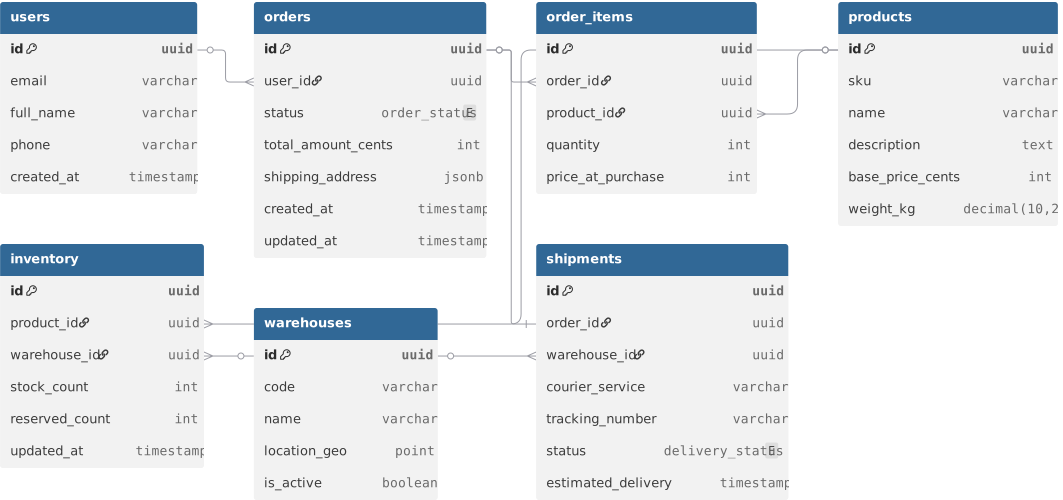
Key Design Choice: Separating `Product` (Catalog) from `Inventory` (Stock). This allows one product to be stored in multiple warehouses with real-time stock reservation logic.
3. Logistics API (Snippet)
paths:
  /v1/shipments/{id}/status:
    post:
      summary: Update delivery status (Webhook)
      description: Called by external Courier Service
      requestBody:
        content:
          application/json:
            schema:
              type: object
              required: [status, timestamp]
              properties:
                status:
                  type: string
                  enum: [IN_TRANSIT, DELIVERED, FAILED]
                location:
                  type: object
                  properties:
                    lat: { type: number }
                    lng: { type: number }
      responses:
        '200':
          description: Status Updated & Notification Sent